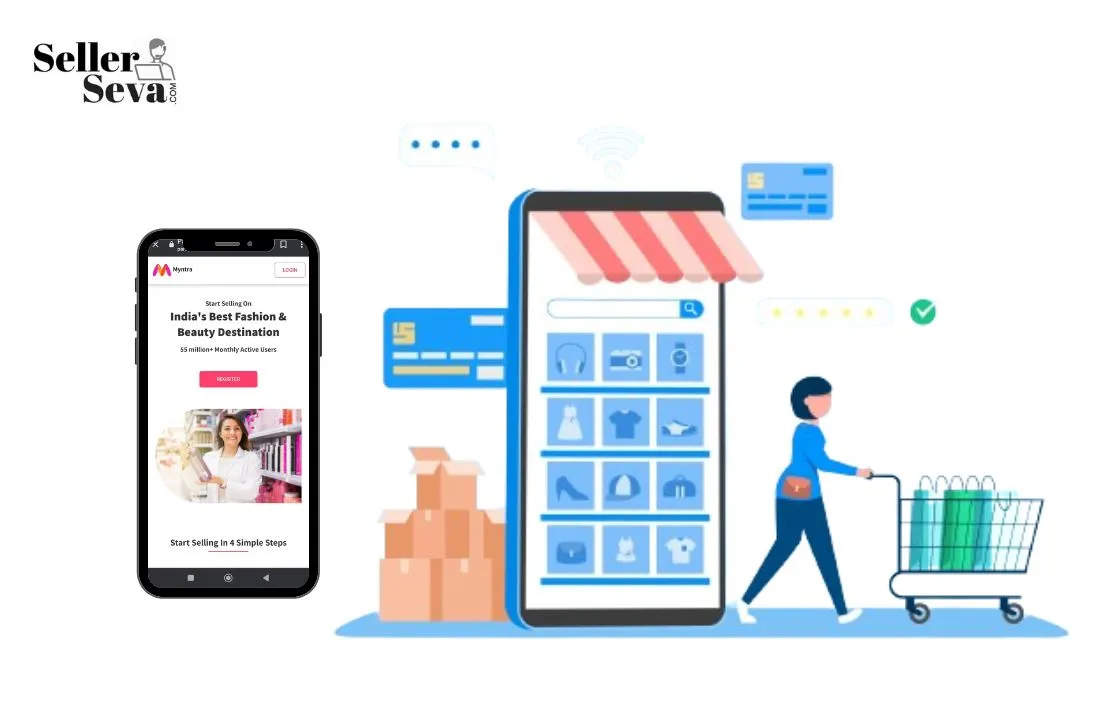
A well-known marketplace can provide new fashion or lifestyle businesses with the ability to reach a huge number of customers through the Internet. But the availability of such products is not only about the registration of a seller’s account. There is much more work to do before this.
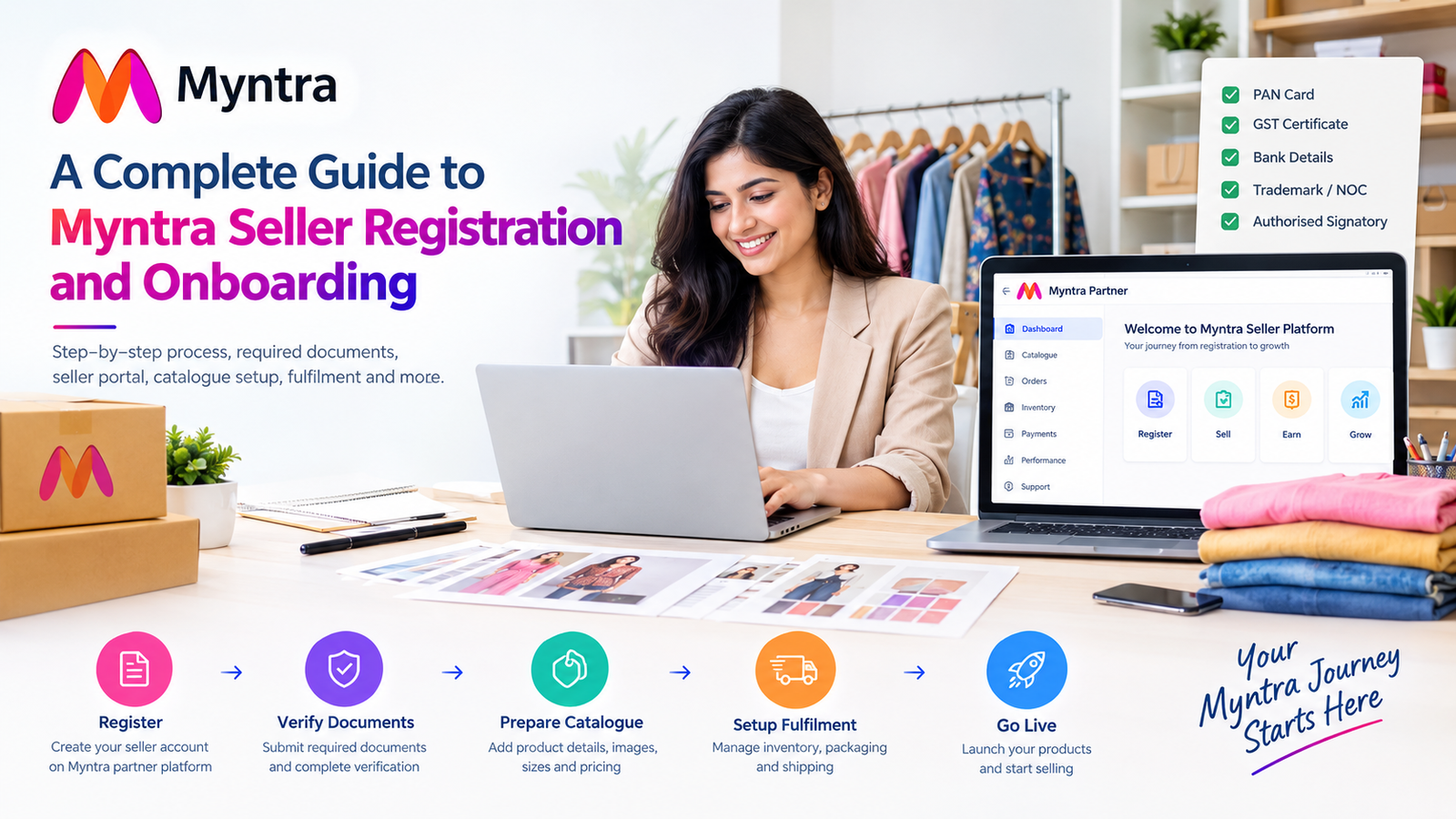
Myntra seller registration is the first step for those brands and business who want to establish their presence on Myntra. At present, Myntra describes its onboarding process into four phases namely Register, Sell, Earn, and Grow. Along with this, it offers various seller tools regarding fulfilment, integration, operational readiness, payments, and growth.
Key Takeaways
- Registration is only the first stage of marketplace onboarding.
- Keep business, tax, banking, and brand documents ready before applying.
- Myntra currently lists PAN, GSTN certificate, cancelled cheque, authorised signatory signature copy, and an original trademark certificate or brand authorisation/NOC among its required documents.
- Product sizing, brand information, and catalogue images need to follow Myntra’s specifications.
- Sellers should understand fulfilment, inventory, orders, payments, and catalogue management before going live.
- Always verify the latest requirements on Myntra’s own partner resources before submitting an application.
What Is Myntra Seller Registration?
Myntra Seller Registration is the first step by which a business or brand submits an application to be a Myntra marketplace partner. This includes submission of information regarding the business and brand along with necessary documentation and preparing products for cataloguing.
The key issue here is that just registration does not imply that products are ready to be sold. The information about current partners on the Myntra site indicates clearly that selling, earning, and growing activities come after registration.
Why Is Registration Preparation Important?
A seller can reduce unnecessary delays by preparing information before starting the application.
A basic preparation checklist should include:
- Legal business information
- PAN and GST information
- Bank account details
- Brand ownership or authorisation documents
- Authorised signatory information
- Product category details
- Product images
- Size and product specifications
- Inventory information
- Pickup or fulfilment information
In addition, having a centralized document folder is useful for brands that market their products through several marketplaces.
Who Can Apply to Sell on Myntra?
Myntra is all about fashion, beauty, and lifestyle products. Currently, its business partner portal has an invitation for organizations that sell products like clothes, footwear, accessories, jewelry, personal care, beauty, and other lifestyle items.
Businesses That May Explore Myntra Onboarding
Potential applicants can include:
- Fashion brands
- D2C brands
- Apparel manufacturers
- Footwear businesses
- Beauty brands
- Lifestyle brands
- Accessory brands
- Jewellery businesses
- Retailers and authorised brand sellers
Eligibility should not be assumed solely from business type. Product category, brand information, documentation, catalogue quality, and Myntra’s current selection requirements can all matter.
As per Myntra, the brand must have adequate breadth of catalog, high-quality products, and a differentiating value proposition to be considered for the same.
Documents Required for Myntra Seller Onboarding
Before starting the application process, it is essential that the sellers organize the paperwork and make sure that names, business particulars, and branding details are consistent.
Myntra’s partner portal currently lists the following documents for starting the selling process:
| Document | Purpose |
| PAN Card | Business and tax identification |
| GSTN Certificate | GST registration and business verification |
| Cancelled Cheque | Bank account verification |
| Authorised Signatory Signature Copy | Agreement and seller authorization |
| Trademark Certificate | Brand ownership verification |
| Brand Authorization / NOC | Used where the seller is authorised to sell another brand |
These requirements have been made available on Myntra’s partner portal and hence sellers must refer to the official source in case any changes are made to the requirements.
Keep Brand Information Consistent
One practical mistake is using different spellings for the business or brand across documents, catalogues, and application information.
Before submission, check:
- Brand name spelling
- Business name
- GST information
- PAN information
- Bank account details
- Authorised signatory details
- Trademark or authorisation information
Consistent information makes verification easier and helps avoid preventable corrections.
Step-by-Step Myntra Seller Registration Process
The process of registration can be explained through steps that include preparation, application, validation, onboarding into the catalogue, setup, and launch.
1. Prepare Your Business Information
First, gather your business legal information, contact information, tax information, bank information, and brand information.
Don’t start the application process with any incomplete documentation if you don’t have to. It is much easier to see the things you are missing when all documentation has been gathered.
2. Register Through the Myntra Partner Platform
The registered partner portal of Myntra is the registration portal and showcases onboarding as per the process of Register, Sell, Earn, and Grow.
Always prefer using the official partner portal over any other registration portals provided by third parties.
3. Submit Required Documents
Upload the required documentation and provide accurate business and brand information.
At this stage, double-check document quality before submitting. Blurry scans, incomplete information, or inconsistent details can create unnecessary follow-up work.
4. Complete Brand and Catalogue Requirements
Once the registration process is completed, the seller should prepare the information about products for catalog listing.
According to Myntra, brand tag details, proper sizing information, and article pictures, which conform to the catalog listing requirements, should be available to sellers.
5. Complete Operational Setup
Once the seller is progressing through onboarding, operational readiness becomes important.
This includes understanding:
- Inventory management
- Order processing
- Packaging
- Fulfilment
- Product availability
- Returns and related processes
- Marketplace integrations where applicable
6. Prepare for Going Live
Before launching products, review your catalogue carefully.
Check every SKU for:
- Correct title
- Correct category
- Accurate size
- Product attributes
- Images
- Pricing
- Inventory
- Brand information
A catalogue review before launch can prevent many post-launch corrections.
Understanding the Myntra Seller Portal
The Myntra seller portal is the operational environment used by marketplace partners to manage their relationship with Myntra and carry out selling-related activities.
Myntra’s existing partner platform features tools and resources on various topics such as reporting, learning, advertising, support, and marketplace operations. Moreover, it claims that Myntra offers a free order management system to sellers.
Important Areas Sellers Should Understand
| Area | What Sellers Should Monitor |
| Catalogue | Product information and content accuracy |
| Inventory | Available stock and SKU status |
| Orders | New, processed, and pending orders |
| Fulfilment | Packing and delivery workflow |
| Payments | Settlement information |
| Performance | Marketplace-related business metrics |
| Marketing | Available promotional and advertising tools |
| Support | Issues, requests, and seller assistance |
Myntra also maintains a dedicated seller support knowledge base where sellers can access operational support information and current notices.
Preparing Your Product Catalogue
The catalogue in the marketplace must assist consumers in comprehending the product and not leave them in doubt regarding its look, dimensions, composition, or use.
In the case of fashion goods, the significance of having an excellent catalogue increases further as consumers generally rely upon various elements of the catalogue to make their purchase.
Catalogue Checklist
Before submission, review:
- Product name
- Brand
- Category
- Colour
- Fabric or material
- Size information
- Product dimensions where applicable
- Product images
- Product description
- Variant information
- Inventory
- Pricing
Myntra specifically highlights accurate sizing and article images as part of its catalogue prerequisites.
Fulfilment and Order Management
Fulfilment dictates the manner in which products are stored, packaged, processed, and delivered after customers make their orders.
Currently, Myntra mentions that there are two fulfilment models: the seller stores and packages the product, and Myntra takes charge of delivering the product.
| Fulfilment Consideration | Seller Should Check |
| Inventory | Is stock updated accurately? |
| Packaging | Are marketplace requirements followed? |
| Orders | Are orders processed on time? |
| Pickup | Is the operational location ready? |
| Returns | Is the team prepared to handle returns? |
| Stock planning | Can popular SKUs be replenished quickly? |
Good operational planning becomes increasingly important as the number of SKUs and daily orders grows.
Myntra and Meesho Seller Requirements
Myntra Seller Requirements can differ from Myntra’s onboarding expectations because marketplaces can use different seller models, category rules, documentation, and operational processes.
For sellers considering multiple marketplaces, the key lesson is not to copy one platform’s registration checklist onto another. Instead, create a separate onboarding checklist for each marketplace.
| Area | Myntra | Other Marketplaces |
| Brand information | Important for fashion and lifestyle onboarding | Depends on platform |
| Product catalogue | Platform-specific requirements | Platform-specific requirements |
| Tax documents | Required according to current onboarding rules | Requirements may differ |
| Brand authorization | May be relevant for branded products | Depends on marketplace |
| Fulfilment | Platform-supported models | Marketplace-specific |
| Seller support | Dedicated partner resources | Varies by platform |
Always verify the latest requirements directly with the marketplace before submitting documents.
Best Practices for New Sellers
The following practices can make marketplace onboarding more organized and reduce avoidable operational problems.
1. Build a Document Folder
Maintain updated copies of:
- GST certificate
- PAN
- Trademark documents
- Brand authorization
- Bank documents
- Signatory information
- Product catalogue files
2. Create a Catalogue Master Sheet
Keep one central spreadsheet containing:
- SKU
- Product name
- Category
- Size
- Colour
- Price
- Inventory
- Product image location
- Description
- Brand
- Other marketplace identifiers
This makes it easier to maintain consistency across channels.
3. Review Images Before Uploading
Ensure that the images are well captured and that they fulfill all technical requirements of the marketplace.
4. Maintain Accurate Inventory
Overselling can create customer-service and operational problems. Inventory should therefore be updated consistently across your selling channels.
5. Monitor Seller Support Updates
Marketplace regulations can change. Currently, the Seller Helpdesk by Myntra releases operational updates and instructions for sellers; hence, it will be important to keep track of the official updates post onboarding.
Common Myntra Seller Registration Mistakes
New sellers often focus heavily on getting an account approved and overlook what happens immediately afterward.
Common problems include:
Incomplete Documents
Submitting incomplete or unclear documents can lead to additional verification requests.
Brand Information Mismatch
Different business or brand names across documents can create unnecessary confusion.
Weak Product Images
Poor photography can reduce product clarity and make catalogue approval or shopper conversion more difficult.
Incorrect Size Information
For apparel and footwear, inaccurate sizing information can create customer dissatisfaction and returns.
Unprepared Inventory
Getting approved without having enough operational stock can make the launch difficult to manage.
Ignoring Marketplace Policies
The obligations of a seller extend even beyond the onboarding process. It is therefore necessary to review marketplace policies and updates regularly.
FAQs
1. What is Myntra seller registration?
Myntra seller registration is the initial onboarding process for businesses or brands seeking to become Myntra marketplace partners. It involves submitting business information, required documents, and completing applicable onboarding and catalogue requirements.
2. What documents are required to sell on Myntra?
The following documents are now being asked by Myntra – PAN, GSTN certificate, Cancelled cheque, authorised signatory signature copy, and Original trademark certificate/brand authorisation/NOC.
3. How does Myntra seller account registration work?
The process starts with preparing business and brand information, registering through the partner platform, submitting documents, completing applicable selection and catalogue requirements, and preparing the business for fulfilment and operations.
4. What is the Myntra seller portal used for?
The partner ecosystem enables seller engagement and market activities. Resources provided by Myntra also include those for reporting, learning, advertising, order management, fulfillment, and sellers.
5. How can a brand sell products on Myntra?
Before any product gets listed for sale, the brand must go through the relevant onboarding process, ensure that all documentation and selection criteria are met, and be ready for operations.
Conclusion
A successful market entry is possible through preparations both pre and post-account creation. Companies need to ensure that they have their documents sorted out, know what the branding and catalogue needs are, have the product information correct, and have fulfilled all the necessary inventory needs.
Myntra seller registration should therefore be treated as the beginning of a structured marketplace onboarding journey rather than the final step. Myntra’s current partner resources provide information about registration, selling, payments, fulfilment, catalogue requirements, and growth tools, so sellers should verify the latest requirements directly before submitting an application.
For businesses looking for support with marketplace onboarding, catalogue management, seller operations, and ongoing marketplace growth, SellerSeva can help simplify the process and manage important ecommerce activities more efficiently.
Related posts
How To Sell On Myntra: A Complete Guide
Myntra has emerged as one of India’s leading fashion and lifestyle marketplaces, offering businesses an excellent opportunit …
Ajio Vs Myntra A Seller’s Guide With Leading E-commerce Service Provider
Do you wish to expand your business or merchandise to the diverse world of online shops? Being a part of the likes of Ajio and Myn …