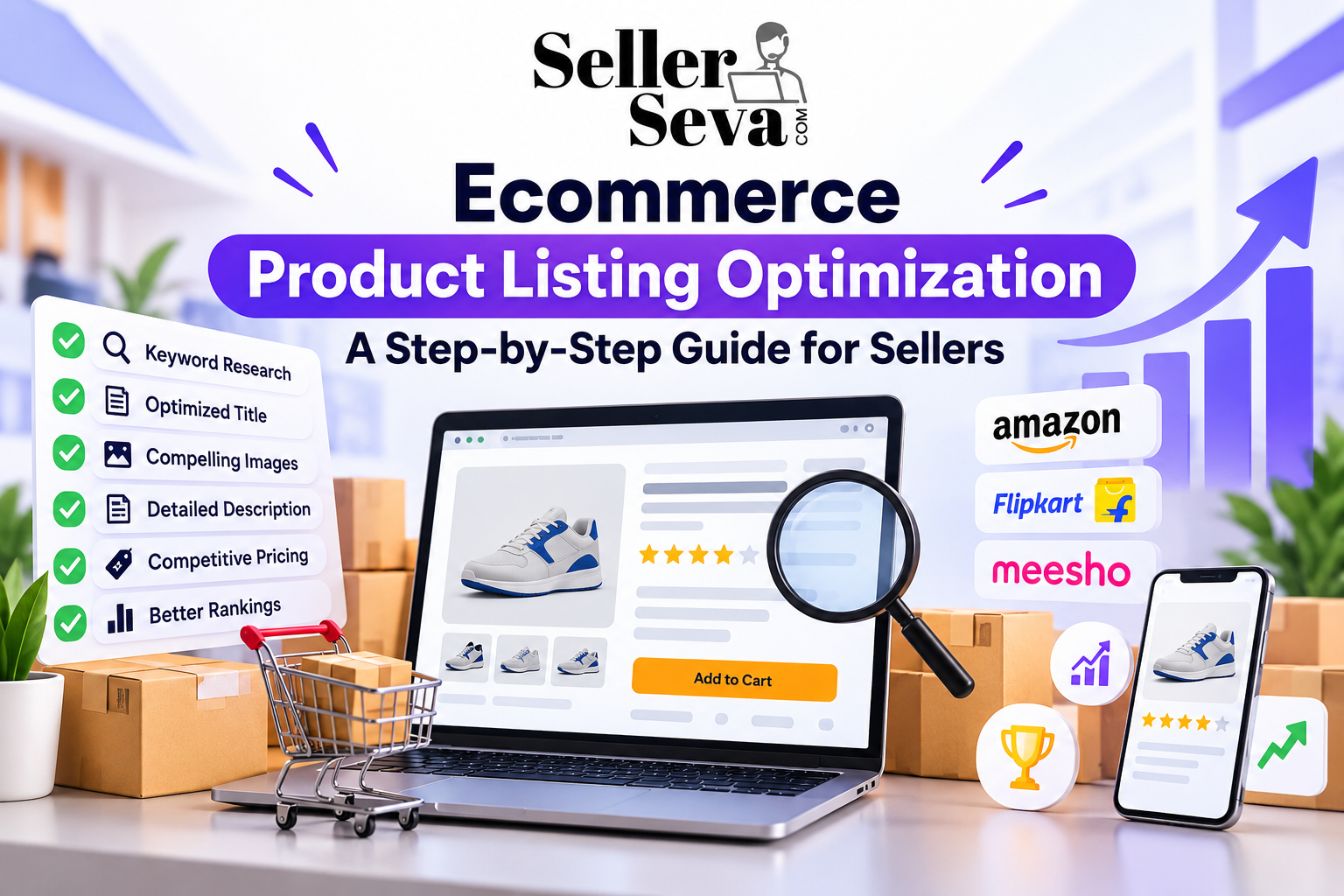
Selling products online is not simply about uploading products and waiting for customers to buy. Shoppers need clear product information, attractive images, accurate specifications, and useful details before making a purchase. This is why product listing optimization services are becoming an important part of ecommerce growth.
An optimized product page not only enables the consumer to know more about the product but also makes it easier for the platform as well as the search engine to recognize the product. For sellers who have to manage products on Amazon, Flipkart, Meesho, Myntra, Shopify, etc., the same product content becomes more useful.
Key Takeaways
- Optimize listings for both consumers and search on the marketplace.
- Use clear and accurate product titles.
- Insert appropriate keywords naturally.
- Include good quality images of the product.
- Complete all key product attributes.
- Focus on product benefits rather than features.
- Apply AI where necessary and conduct quality control.
- Regularly review low-performing products.
- Ensure consistency of product data across marketplaces.
What Is Ecommerce Product Listing Optimization?
Ecommerce product listing optimization is the process of improving product titles, descriptions, images, keywords, specifications, attributes, and other information so products are easier to discover and understand.
An excellent listing achieves two things. First, it equips customers with the information needed to make a purchasing decision. Secondly, it gives structured information, which allows the market search system to understand the product.
Important listing elements include:
- Product title
- Product description
- Product photos
- Product category
- Product features
- Dimensions and colors
- Material or specification
- Benefits of product
- Keywords
- SKU details
- Price information
The goal is not to fill a listing with keywords. The goal is to create useful, accurate, and relevant product information.
Why Product Listing Optimization Matters
A customer cannot physically touch or inspect an online product before purchasing it. Your listing therefore becomes the digital salesperson for that product.
Professional optimization can help sellers:
- Increase discoverability of products
- Relay benefits of products
- Provide a good shopping experience
- Ensure scannable product information
- Ensure catalog consistency
- Decrease information voids
- Ensure marketplace visibility
- Boost customer confidence
For businesses managing hundreds or thousands of products, optimizing every listing manually can also become time-consuming. A structured optimization process helps businesses maintain quality as their catalogs grow.
Step-by-Step Product Listing Optimization Process
1. Understand the Product
Before creating or rewriting a listing, understand the product completely.
Identify:
- Product category
- Target consumer
- Features
- Benefits
- Materials used
- Size or dimensions
- Color options
- Main usage
- Problems it solves for consumers
- Important considerations for purchase
For instance, a seller advertising the women’s cotton kurta must know about the type of fabric, fit, usage, sizes, colors, care, and styling of the same.
This information becomes the foundation for the listing.
2. Research Relevant Keywords
The process of keyword research can help determine the terms used by possible buyers to search for a product.
Look for:
- Product-specific terms
- Category keywords
- Feature-based searches
- Long-tail phrases
- Commercial keywords
- Problem-based searches
- Marketplace search terms
Keywords should be used naturally. Using the same term repeatedly makes your listing hard to read, and creates a bad user experience for the customer.
The best method would be to add the primary product name along with its attributes in natural language.
3. Create a Clear Product Title
The product title should quickly tell shoppers what they are viewing.
A simple structure is:
Brand + Product Type + Key Feature + Material + Important Variant
For example:
Women’s Cotton Printed Regular-Fit Kurta
This is much clearer than:
Best Women’s Kurta Cotton Kurta Printed Kurta Online Best Kurta
This first title is helpful without any redundant information.
4. Write Customer-Focused Descriptions
A strong description should answer the questions customers may have before buying.
Explain:
- What the product is
- Who it is suitable for
- Main features
- Product benefits
- Material
- Usage
- Care instructions
- Size information
- Important specifications
Avoid generic statements that could apply to almost any product.
Instead of simply saying “premium quality product,” explain what makes the product useful, such as its material, construction, design, functionality, or intended use.
5. Optimize Product Images
Product photography is one of the most important parts of an ecommerce listing.
Customers should be able to clearly understand the product from its images.
Where appropriate, include:
- Front view
- Rear view
- Side view
- Close-up views
- Material or texture
- Product being used
- Package
- Size/scale reference
Images should be sharp, well-lit, relevant, and consistent with marketplace requirements.
A good image does not replace a good description, but it can make the product easier to understand within seconds.
6. Complete Product Attributes
Product attributes provide structured information about a product.
For example:
| Product Category | Useful Attributes |
| Fashion | Size, color, fabric, fit |
| Electronics | Brand, model, connectivity, warranty |
| Beauty | Ingredients, quantity, skin type |
| Home | Material, dimensions, color |
| Grocery | Weight, ingredients, shelf life |
Inaccurate attributes can lead to confusion and will make customers look elsewhere for information.
Sellers should therefore complete all relevant fields instead of focusing only on the title and description.
How to Use Keywords Without Keyword Stuffing
Keyword optimization should improve relevance without making content unnatural.
For example, if the product is a cotton shirt, relevant terms might include:
- Cotton shirt for men
- Casual cotton shirt
- Full-sleeve cotton shirt
- Regular-fit shirt
These phrases can be used where they genuinely describe the product.
Avoid repeating the same keyword in every sentence. Search optimization works best when the content remains useful and readable.
Amazon Product Listing Optimization
Sellers operating on Amazon need to pay close attention to marketplace-specific requirements. Amazon product listing services can support areas such as title optimization, bullet points, descriptions, backend search terms, images, attributes, and catalog consistency.
The optimization process should focus on:
- Search relevance
- Product accuracy
- Category requirements
- Customer readability
- Important product attributes
- High-quality imagery
- Clear benefits
There could be different Amazon requirements depending on the product category and the marketplace where the product will be listed.
This is applicable to all other ecommerce sites; one should never replicate the listing on all platforms without customizing it for each platform.
AI-Powered Product Listing Optimization
AI is increasingly useful for ecommerce businesses managing large catalogs. AI-powered product listing optimization services can help businesses create initial product descriptions, identify missing information, organize product attributes, suggest keyword variations, and process large volumes of catalog data.
However, AI should support the optimization workflow rather than completely replace human review.
Human verification is important for checking:
- Product specifications
- Brand voice
- Technical information
- Product claims
- Grammar
- Marketplace policies
- Category accuracy
For instance, AI can create descriptions which seem credible but in the process, may refer to a feature that the item actually does not have. This is where the need for human review becomes important.
Common Product Listing Mistakes
- Keyword Stuffing: Avoid repeating keywords excessively.
- Weak Titles: Use clear, informative product titles.
- Poor Images: Use clear, relevant, high-quality images.
- Missing Attributes: Include key details like size, material, and dimensions.
- Generic Descriptions: Write unique descriptions for each product.
- Incorrect Information: Ensure all product details are accurate.
- Poor Mobile Experience: Keep product content easy to scan on mobile.
Best Practices for Ecommerce Sellers
A successful optimization strategy should continue after the listing is published.
Keep Catalog Data Consistent
Make sure product names, SKUs, specifications, variants, and attributes remain accurate across sales channels.
Review Underperforming Products
If there is visibility for a product but little sales, don’t just automatically think that the issue lies with the price.
Check:
- Product images
- Title
- Description
- Attributes
- Pricing
- Reviews
- Availability
Use Customer Feedback
Consumer inquiries and ratings may provide insights into informational gaps. For example, if consumers keep asking about sizing, material, measurements, or compatibility, it might be a good idea to include such information on the product page.
Update Product Content
Products change over time. New variants, packaging, specifications, and features should be reflected in the product information.
Maintain Brand Consistency
A large ecommerce catalog should have a consistent tone, formatting structure, image quality, and information hierarchy.
FAQs
What is product listing optimization?
It is the process of improving product content, images, keywords, and attributes for better discovery and customer understanding.
Why are product listings important?
They help customers understand products and make more informed purchase decisions.
What do product listing optimization services include?
They can include keyword research, titles, descriptions, images, attributes, catalog cleanup, and listing audits.
Can AI create product listings?
Yes. AI can help generate and organize content, but human review is recommended.
Is Amazon listing optimization different?
Yes. Each marketplace can have its own requirements, fields, policies, and optimization practices.
How often should listings be updated?
Review them regularly and whenever products, customer behavior, marketplace requirements, or performance change.
Can optimized listings increase sales?
They can improve product presentation and customer understanding, but sales also depend on pricing, demand, competition, reviews, inventory, and product quality.
Conclusion
An effective ecommerce product catalog needs to do more than just add many products. Each individual product page needs to give information that is clear, accurate, relevant, and persuasive.
Using product listing optimization services can help sellers improve product titles, descriptions, images, attributes, keywords, and overall catalog quality. When these improvements are combined with marketplace data and regular performance analysis, businesses can build a more consistent and scalable product management process.
For brands that need support with catalog management, marketplace operations, product content, and ecommerce growth, SellerSeva can help simplify product listing management and create a more organized approach to selling across ecommerce channels.
Related posts

How to Choose the Best Ecommerce Account Management Company in India
Selling products online in India involves much more than uploading products and waiting for orders. Sellers need to manage product …
Ecommerce Product Listing Optimization: 10 Strategies That Increase Sales
A product page does more than display an item for sale. It helps shoppers understand what the product offers, decide whether it me …