Running an Amazon store involves active monitoring and problem solving, along with periodic performance checks. Orders have to be processed, product listings must be maintained, advertisement campaigns have to be attended to, and account notifications can’t be overlooked. Failure to do so will lead to small operational problems impacting sales and profits.
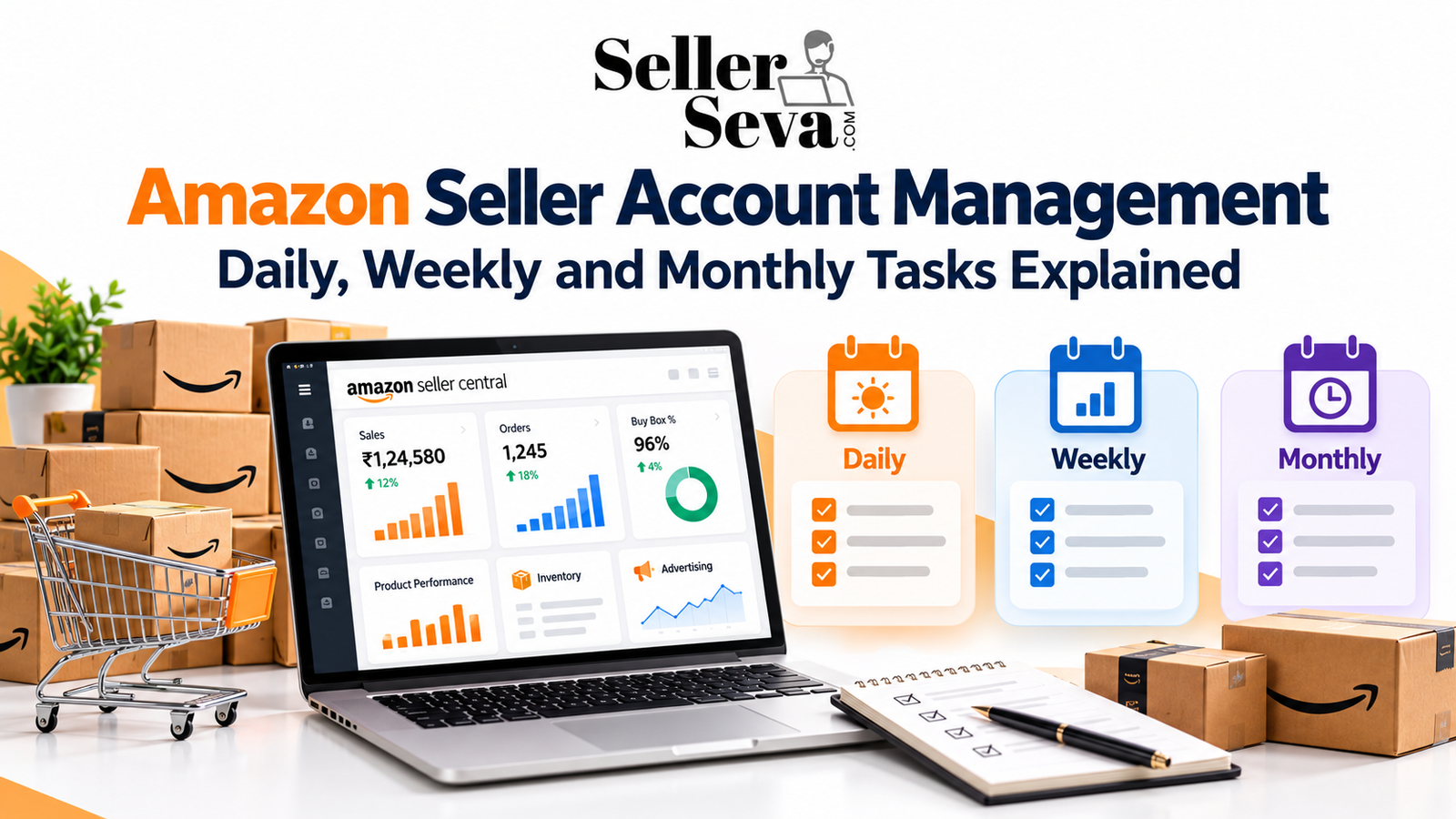
Amazon seller account management becomes easier when tasks are organised by frequency and priority. Daily checks help identify urgent issues, weekly reviews reveal performance trends, and monthly analysis supports better business decisions. This checklist explains what sellers and account managers should review, what actions to take, and how to keep store operations organised.
What Does an Amazon Account Manager Do?
The account manager from Amazon is responsible for the tasks needed to ensure the improvement and maintenance of the seller’s account. The duties may include account health management, listing management, inventory management, ad performance review, sales analysis, etc.
Responsibilities vary depending on the nature of business, way of fulfillment, type of products, etc. The account management process that can serve a purpose is one that defines what needs to be checked, who does it, what issues need to be addressed immediately, etc.
Daily Amazon Seller Account Management Checklist
Daily tasks focus on account stability, product availability, customer concerns, and problems that may require immediate action.
1. Review Account Health Notifications
Review the Account Health dashboard on Amazon Seller Central to find policy announcements, performance issues, listing limitations, and compliance requests.
Action checklist:
- Review new notifications and outstanding issues.
- Identify required actions and applicable deadlines.
- Assign an owner to each unresolved issue.
- Escalate urgent problems through the appropriate Amazon process.
Never let urgent issues regarding account health wait till the weekly review. Immediate response will assist sellers in solving issues that can get worse over time.
2. Check Product Listings and Availability
Verify relevant listings to ensure products are currently available for purchase. You should also watch out for any hidden ASINs, listing modifications, missing information, or variation issues.
Prioritise products that contribute significantly to sales because listing interruptions can affect their availability and performance.
Action checklist: Investigate unavailable products, identify listing errors, and follow Amazon’s applicable process to resolve them.
3. Monitor Orders and Fulfilment
Check the new orders, pending shipment, cancelation, and fulfillments. For seller-fulfillment, you need to focus on handling time and tracking numbers. For FBA sellers, you need to keep an eye out for any fulfillment or inventory issue needing your attention.
Action checklist: Identify delayed orders, resolve fulfilment exceptions, and ensure outstanding tasks are assigned and completed within the applicable deadlines.
4. Check Pricing and Advertising Activity
Monitor important product prices and active advertising campaigns for unexpected changes, budget limitations, or delivery problems. A campaign that stops delivering or spends unusually quickly may need investigation.
Action checklist: Check pricing alerts, review campaign delivery, and investigate unusual expenditure. Avoid making significant bid changes without sufficient performance data.
5. Follow Up on Customer and Support Issues
Review customer comments and unsolved Seller Support tickets. See if more data is needed and if there are any open tickets impacting your listings, inventory, or account performance.
Action checklist: Respond within applicable requirements, record pending actions, and follow up on unresolved cases when necessary.
Weekly Amazon Seller Account Management Tasks
Weekly reviews focus on performance patterns and improvements rather than individual daily fluctuations.
1. Analyse Sales and Inventory Trends
Comparing the number of sold products with available stock, deliveries, and suppliers’ lead time helps to reveal the products prone to shortages, as well as products that stayed unsold for an extended period.
Effective Amazon listing optimization services requires balancing product availability with the cost of holding excess stock.
Action checklist: Prepare a replenishment plan, flag low-stock products, and investigate slow-moving inventory before placing additional orders.
2. Review Amazon PPC Campaign Performance
Analyse impressions, clicks, click-through rate (CTR), advertising cost of sales (ACoS), return on ad spend (ROAS), and attributed sales where available.
Amazon PPC management involves reviewing targeting, search terms, bids, and budgets according to campaign objectives and product margins.
Action checklist: Identify irrelevant search terms, investigate campaigns with weak results, and adjust budgets or bids when the available data supports a change. Evaluate advertising alongside total product profitability.
3. Audit Listings and Customer Feedback
Review the title, bullets, images, descriptions, variations, and search terms. Look into customer feedback and reasons behind returns for any recurring complaints which may suggest poor information on product quality.
Action checklist: Prioritise listing updates that address identifiable problems. Avoid unnecessary changes to products that are already performing well.
4. Review Competitor Pricing and Offers
Monitor relevant competitors for meaningful price changes, promotional offers, and product positioning. Compare these changes with your own costs, margins, and value proposition.
Action checklist: Record significant competitor activity and evaluate whether your pricing or product presentation needs adjustment.
Monthly Amazon Seller Account Management Tasks
Monthly tasks help sellers evaluate overall account performance, identify recurring problems, and plan future growth.
1. Review Sales and Profitability
Analyze monthly income from sales, number of items sold, cost of products, fees on Amazon, fulfillment costs, marketing costs, and returns.
Just because there is a lot of sales does not automatically imply profitability. The seller needs to look at costs for each product to know which products are good for business.
Action checklist: Compare results with previous periods, investigate declining margins, and identify opportunities to control costs.
2. Evaluate Product Performance
Review conversion rates, sales trends, inventory turnover, customer feedback, and contribution margins. Identify products that may benefit from additional investment and those requiring further investigation.
Action checklist: Create a priority list for products to scale, optimise, monitor, or reconsider based on business objectives and available evidence.
3. Audit Compliance and Recurring Issues
Examine unresolved notifications, documentation requirements, listing restrictions, and recurring operational issues. Daily monitoring is important, but monthly analysis helps to identify any weakness in internal processes.
Action checklist: Document recurring issues, verify completed corrective actions, and update internal procedures where needed.
4. Prepare the Next Month’s Action Plan
Use performance data to set targets for advertising, inventory, listing improvements, and profitable sales. Consider upcoming promotions, seasonal demand, and available resources before committing to new activities.
Action checklist: Set measurable goals, assign responsibilities, establish review dates, and decide which metrics will indicate progress.
Amazon Seller Account Management: Daily vs Weekly vs Monthly
| Frequency | Key Responsibilities | Expected Outcome |
| Daily | Account health, listings, orders, pricing, customer and support issues | Timely issue detection |
| Weekly | Inventory planning, PPC analysis, listing audits, competitor reviews | Better operational decisions |
| Monthly | Profitability, product performance, compliance review, growth planning | Clearer business priorities |
This schedule should be adjusted to the account’s size and operational needs. Urgent account notifications and serious listing or fulfilment issues should always take priority over routine reviews.
How to Track Amazon Account Management Performance
Completing tasks is not enough; sellers also need to understand whether the work is producing useful outcomes. Maintain a simple tracking sheet or dashboard with the issue, date identified, priority, assigned owner, action taken, and resolution status.
Review relevant performance indicators such as sales, conversion rate, inventory availability, advertising efficiency, and product margins. Choose metrics according to business goals rather than assuming every account should use the same targets.
This process also helps business owners evaluate their account management team through completed actions, reporting quality, issue resolution, and evidence-based recommendations.
Frequently Asked Questions
1. What should an Amazon account manager check daily?
Account notifications, product status, order details, shipping status, pricing notifications, advertising campaigns, customer messages, and open support tickets must be reviewed daily.
2. How often should Amazon sellers review PPC campaigns?
Campaign delivery and unusual spending should be monitored regularly. Detailed optimisation is generally better performed using sufficient performance data and the campaign’s objectives.
3. Why is weekly inventory planning important?
Weekly planning assists sellers in recognizing possible stock-outs, taking into consideration supplier lead times, and prevents excessive replenishment of underperforming merchandise.
4. What should an Amazon account management report include?
A report may include sales, inventory, advertising performance, listing issues, account health updates, profitability, completed actions, and unresolved priorities.
5. When should a seller hire an Amazon account management agency?
Professional assistance can help in situations where operational loads increase, there is a need for advertising expertise, listing management becomes complicated, and reporting is inconsistent internally.
Manage Your Amazon Store with Seller Seva
A structured account management checklist helps sellers prioritise urgent issues, improve operational consistency, and make informed decisions about advertising, inventory, and profitability. Daily monitoring keeps essential activities on track, weekly reviews identify improvement opportunities, and monthly reporting supports business planning.
If managing these responsibilities is taking time away from business growth, explore Seller Seva marketplace services to determine which support options match your store’s requirements.
Related posts

Amazon Seller Account Management: Complete Guide for Indian Brands
Selling via Amazon will open up millions of customers to Indian brands, but running a marketplace account is far beyond just listi …

7 Essential Amazon Seller Account Management Tips for Sellers
Running an Amazon business takes more than just getting orders. There is product data accuracy, ensuring healthy inventory, keepin …