Introduction
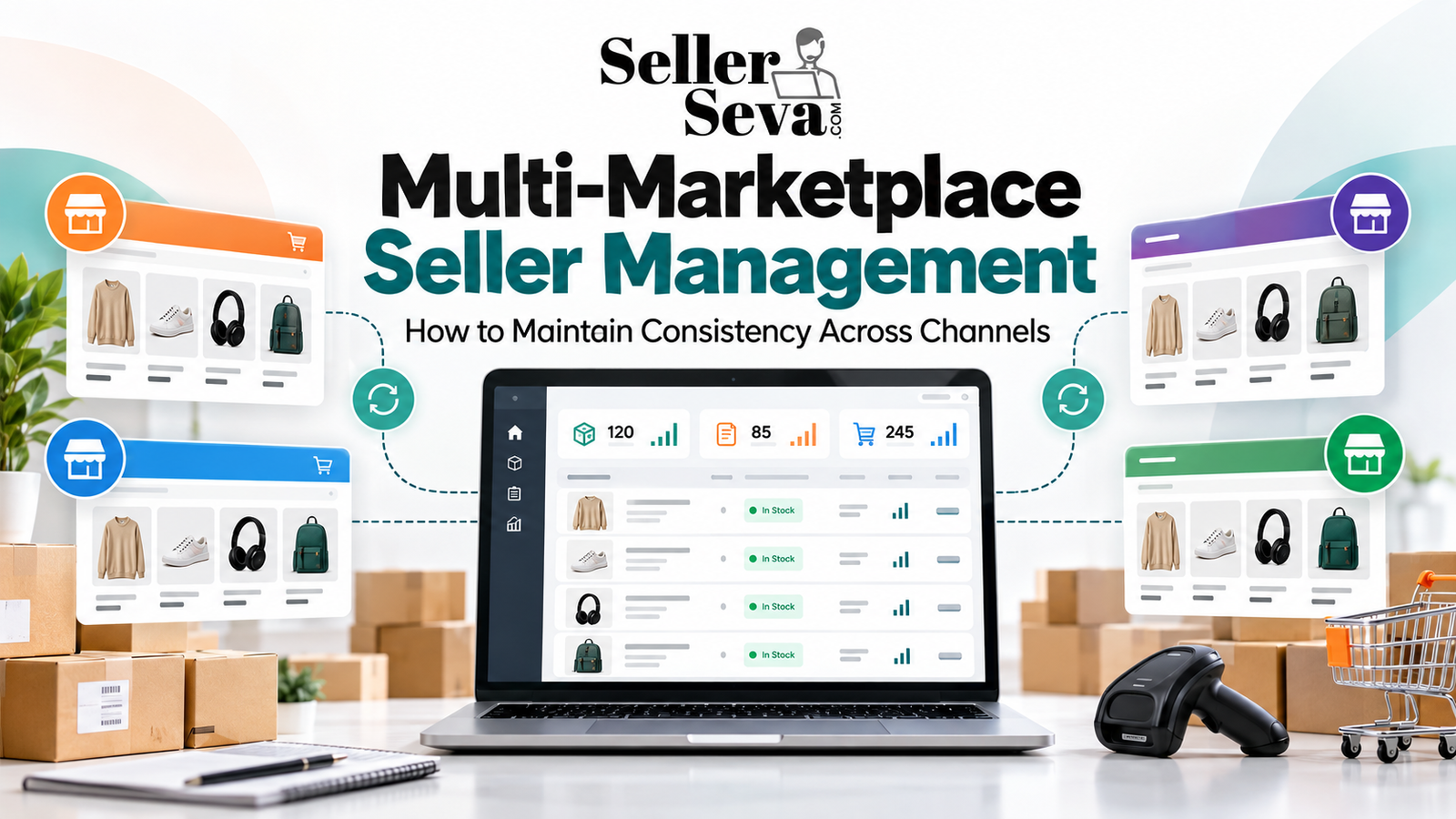
Managing multiple marketplaces may bring about some operational difficulties for ecommerce brands. There may be differences in prices, delays in updating inventory, and inconsistencies in descriptions, which may mislead consumers. These problems may result in order cancellations and bad reviews. Proper multi marketplace seller management can help companies align their operations, keep their listings correct, and ensure that shoppers get a cohesive experience. This article is a step-by-step guide to managing your brand’s marketplace operations.
Why Consistency Matters Across Marketplaces
Consumers are expected to have access to relevant information regarding their products, competitive prices, assured delivery, and prompt response irrespective of the place from which they choose to purchase. Inconsistencies in information provided by marketplaces may affect consumer trust levels.
For instance, a consumer might be able to purchase only one particular size of a product from Amazon but not from Flipkart, despite having enough inventory with the business. In addition, inconsistent specifications and pictures may lead to increased chances of product returns.
Consistency helps businesses:
- Minimize listing errors and inventory cancellation issues.
- Keep product information consistent.
- Streamline order fulfillment processes and support services.
- Gain accurate insight into your sales performance.
- Defend brand integrity and customer trust.
Consistency does not mean that each marketplace should have the same content for all cases. Information about the product has to be true, but titles, descriptions, marketing and formatting may vary depending on the specific marketplace.
1. Centralize Product Information
There is a central product database which ensures the reliability of information for all marketplaces. It provides a single source of important information about products rather than keeping data in various spreadsheets.
The catalog should include:
- Product name, SKU, and brand information.
- Product description and specification.
- Image, size, colour, and variants.
- Dimensions, weight, and packaging information.
- Pricing policy and product identification.
In case there is a change in the product specification, the new specifications can be evaluated and disseminated to the appropriate channels. In that case, there is a reduced possibility of having outdated specifications on a particular marketplace.
Large catalog businesses may use product information management systems or suitable e-commerce integrations to make updating easier. However, each listing on the marketplace should be reviewed to ensure that all the information is updated properly.
2. Keep Inventory Accurate Across Channels
Inventory synchronization is among the major components in multi marketplace seller management. If there is a delay in updating the inventory levels, then orders can keep coming for the product even after it runs out of stock Businesses can improve their approach by learning more about multichannel inventory management and applying suitable practices to coordinate stock across sales channels.
This can cause overselling, order cancellations, account performance problems, and customer dissatisfaction.
A practical inventory management process includes:
- Maintaining a central inventory record for each SKU.
- Updating stock after confirmed sales, returns, and restocking.
- Accounting for reserved inventory and pending orders.
- Setting safety stock levels for fast-selling products.
- Reviewing discrepancies between marketplace and warehouse records.
Example: If there are 100 items being sold through three different marketplaces, the seller should not individually guarantee all 100 units through each one of the three marketplaces. The stock available should be synchronized based on how the business works.
Inventory tools can automate many updates, but regular reconciliation remains important, particularly during major sales events.
3. Maintain Consistent Pricing and Promotions
The pricing difference can be intentional since the markets have varying prices for transaction cost, promotion, and business operations. However, the pricing difference that lacks any explanation might impact the customer confidence resulting in reduced profitability.
Businesses should establish clear pricing rules that consider:
- The cost of production and expected margins.
- Commissions and fulfillment costs.
- Shipping costs and packaging costs.
- Discounts and campaign costs.
- Pricing by competitors and limitations of the marketplace.
A shared pricing policy helps teams understand the minimum acceptable margin and the conditions under which discounts can be approved.
The calendars for promotion must also be synchronized. In case a product is part of a campaign on one platform but not another, then the distinction should be intentional and not due to outdated information.
Marketplace-specific requirements must be checked before implementing price changes or promotional offers.
4. Standardize Product Listings Without Ignoring Platform Rules
Listing product details will assist the buyers to learn about their products. Any inconsistencies in specifications, images, variations, and descriptions may affect conversion rates and lead to returns.
It is necessary for brands to develop listing guidelines regarding product title, description, images, specifications, keywords, and variations.
But there are different needs for each marketplace. The same title, which works on Amazon, will require some modifications to work for Flipkart or any other marketplace. It is important to make sure that the same details remain intact on different marketplaces.
A reliable listing workflow includes:
- Using verified product specifications.
- Image check against marketplace guidelines.
- Matching variants to the right SKU.
- Category and attribute validation.
- Update products which have been discontinued or modified.
- Audit of products for lack of information.
Professional Marketplace management services can help businesses organize catalog updates, improve listing quality, and monitor compliance across multiple channels.
5. Create a Unified Order and Customer Support Process
Different marketplaces have unique processes for fulfilling, delivering, cancelling, and returning orders. Without proper workflows, teams might overlook the orders or handle customer problems inappropriately.
The process must be incorporated into a manner where the order information can be processed within a structured workflow without violating any policies set by the platform.
Useful practices include:
- Review of the new orders and dispatch time.
- Responsibility assignment for pick up, packing, and dispatch.
- Review of pending deliveries and any anomalies.
- Report on returns, refunds, and cancellations.
- Provision of responses to customer inquiries within a specified time frame.
- Recurrent problems arising from customer complaints.
SOPs can help employees implement the same level of standards even when the measures required vary in different marketplaces.
Communication with customers must always be formal and precise. Consistency in services does not necessarily mean consistency in communication; it means clear communication and problem-solving.
6. Use Technology to Reduce Manual Work
Managing several seller accounts through separate dashboards can consume significant time. Manual updates also increase the likelihood of human error, especially when catalogs and order volumes grow.
The right kind of ecommerce management software would integrate all of the inventory, orders, product, and reporting processes. This could either do the following depending on the software itself:
Before selecting a solution, businesses should assess:
- Market places that allow integration.
- Ability to create catalogs mappings and SKUs.
- Frequent inventory synchronization.
- Order and returns management ability.
- Restrictions on reports and access.
- Cost and integration support issues.
Automation should focus on repetitive, rule-based tasks. Important changes involving pricing, compliance, product claims, or account restrictions should still receive appropriate human review.
7. Monitor Performance Across Every Marketplace
The measurement of performance makes it simpler for organizations to maintain consistency in their operations. With each market having unique reports, the need for a standardized report format is essential.
Important metrics include:
| Metric | Why It Matters |
| Sales and revenue | Measures commercial performance |
| Conversion rate | Shows how effectively listings generate orders |
| Cancellation rate | Highlights fulfilment or inventory issues |
| Return rate | Helps identify product and listing problems |
| Advertising cost | Supports campaign and budget decisions |
| Profit margin | Shows whether sales remain financially sustainable |
| Listing errors | Reveals catalog quality issues |
With the use of weekly dashboards, mismatches of stocks, poorly performing products, surprises in returns, and decreased effectiveness of advertisements can be brought into attention. On the monthly level, pricing and marketing efforts can be adjusted accordingly.
Differences between marketplace commissions, traffic, marketing strategies, and consumer habits should be considered while making comparisons. Revenues do not reflect the true profits of a particular channel.
8. Build a Repeatable Marketplace Management Workflow
A documented workflow ensures that important tasks are completed consistently, even as a business adds more products or sales channels.
A practical workflow can follow this sequence:
- Product setup: Confirm product information, pictures, specs, and SKUs.
- Listing creation: Customize product content for every marketplace policy.
- Inventory allocation: Fix available inventory and safety levels.
- Pricing review: Confirm margins, promotions, and platform-specific pricing.
- Order processing: Monitor fulfilment, shipping, returns, and cancellations.
- Performance review: Check key metrics and resolve recurring issues.
- Compliance audit: Review listing status, policy changes, and account notifications.
Clear ownership is no less critical. The catalog team can handle product information, the operations team can keep track of the fulfillment, and the marketing team can keep an eye on marketing campaigns.
When Businesses Need Professional Marketplace Support
As marketplace operations become more complex, internal teams may struggle to manage listings, inventory, promotions, advertising, compliance, and reporting simultaneously.
Professional Ecommerce account management services can help businesses coordinate these activities, establish repeatable processes, and identify operational gaps. Depending on the provider, support may include catalog optimization, account monitoring, marketplace advertising, order coordination, and performance reporting.
Brands selling on Amazon may benefit from specialized Amazon seller account management for listing maintenance, account health monitoring, advertising coordination, and operational reporting.
Similarly, Flipkart account management services can support catalog updates, promotional coordination, seller operations, and marketplace performance monitoring. Service scope varies by provider, so businesses should confirm deliverables, reporting frequency, and responsibilities before selecting a partner.
The appropriate model for support is based on product volume, company resources, market coverage, and objectives. Some organizations require help in performing certain operations, while some need coordination over several channels.
Conclusion
Consistency across multiple online markets goes beyond merely posting the same product on different sites. The company needs to have proper product information, synchronized inventory, proper pricing strategies, reliable fulfillment, proper customer support, and consistent performance tracking. By integrating all these with appropriate technology, consistency can be achieved.
A structured multi marketplace seller management strategy also gives brands a stronger foundation for expanding into additional channels without allowing complexity to undermine service quality or profitability. SellerSeva supports ecommerce brands with marketplace-focused account management and operational assistance designed to help streamline selling activities and support business growth.
Frequently Asked Questions
Q: How do I stop overselling on Amazon and eBay at the same time?
A: Use software that automatically syncs your inventory levels across all sites in real time.
Q: Do I have to upload my products one by one to every website?
A: No, you can create one master listing and push it to all marketplaces at once.
Q: How do tracking numbers get sent back to the right customer?
A: Your dashboard automatically sends the tracking info back to the site they bought it from.
Q: Can I charge different prices for the same item on different sites?
A: Yes, you can set rules to automatically change prices based on each site’s fees.
Q: How do I handle returns and refunds from multiple channels?
A: You manage, approve, and track all customer returns directly inside one single dashboard.
Related posts
Amazon Seller Account Management: Daily, Weekly and Monthly Tasks Explained
Running an Amazon store involves active monitoring and problem solving, along with periodic performance checks. Orders have to be …

10 Signs Your Flipkart Seller Account Needs Professional Management
Managing a Flipkart business involves much more than receiving orders and dispatching products. Sellers need to manage product lis …