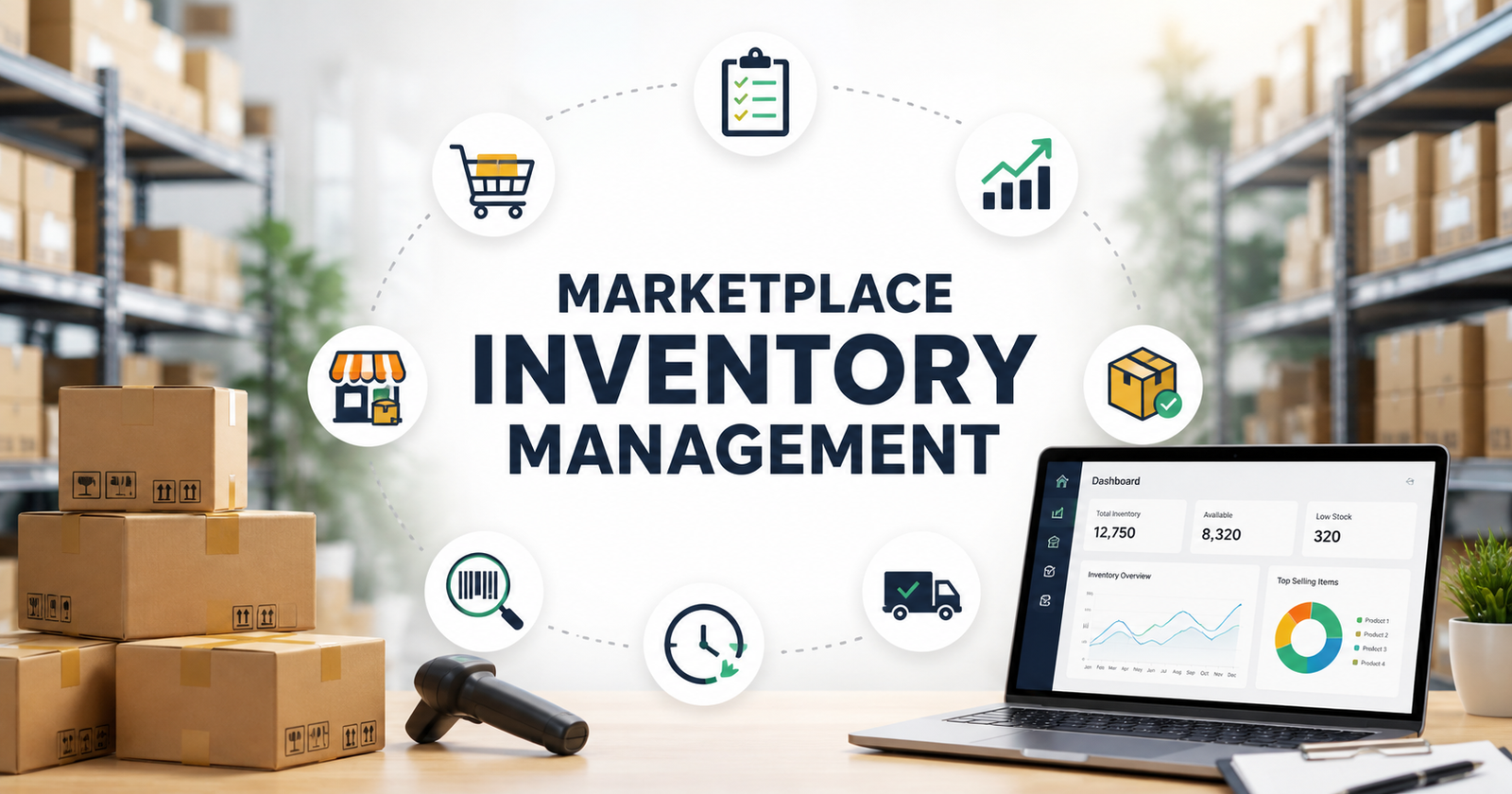
Inventory management becomes all the more difficult when the ecommerce store operates on multiple marketplaces. A particular product may be available on one marketplace but may be sold out on another, leading to disparities in actual stock and displayed stock. This can cause cancellations, shipping delays, overselling and loss of sales.
Good marketplace inventory management enables sellers to track their actual stock levels, understand which products need restocking, and react accordingly to fluctuations in demand from customers. By having good inventory tracking and forecasting systems in place, sellers can ensure that in-demand products are always available without overstocking.
The following are 10 tips that can be helpful for online sellers in managing their marketplace inventory effectively.
1. Track Inventory in Real Time
Inventory accuracy begins with being aware of the exact amount of stock on hand. A sale, return, cancellation, damage, or new shipment could alter the inventory level.
Real-time tracking allows merchants to recognise products that have reached a low level of stock and could soon become out of stock. It decreases the possibility of displaying inaccurate inventory levels in marketplace listings.
For businesses that sell across multiple platforms, automated inventory tracking for e-commerce can help minimise mistakes.
2. Set Clear Reorder Levels
Ordering products after the inventory becomes zero will likely result in a stockout. Instead, it would be wise to establish a reorder level for every key product.
Reorder point needs to be determined based on average demand, lead time, and other factors. Products with high sales and high lead times need to have higher reorder levels.
This system may come in handy to provide an answer to the following question: When should the next order be placed?
3. Identify Fast-Moving Products
While some products contribute heavily towards total sales in the market, others are slow-moving. This could lead to understocking or overstocking if all products are treated the same way.
Analyse your sales information to determine your top-selling products. These products deserve more priority in purchasing and inventory control.
For instance, if a certain product keeps on selling out faster than other products, it may need a higher re-ordering quantity and safety stock level.
4. Maintain Safety Stock
Increased demand can lead to lower inventory availability. Unexpected demand due to promotion, seasonality, advertising, or an event happening in the market can create more demand.
Safety stock is required to safeguard against increased demand or any delays from the suppliers.
The appropriate amount is determined by the product demand, the regularity of sales, supplier performance, and lead time. Fast-moving items need to be managed more than slow-moving items.
5. Use Demand Forecasting
Past sales history may assist the seller in forecasting future needs for inventory. Inventory forecasting for ecommerce helps a business to anticipate future requirements rather than responding to stock shortages.
Analyzing past sales trends, seasonal sales patterns, promotions, product launches, and supplier lead times in inventory forecasting.
In case the item has a tendency to sell more in a certain season, then replenishment of inventory should be planned.
6. Synchronise Stock Across Channels
Multi-channel selling through Amazon, Flipkart, Meesho, Shopify, Myntra, and others would enable businesses to have access to many customers, although it complicates their process of managing their inventory.
In case a product is available through several different platforms, it is necessary for the quantity of that item to be synchronised among all the different platforms. Otherwise, an order placed on one platform would not decrease the quantity on the other.
Multi-channel inventory management becomes useful in keeping the quantity consistent.
7. Check Stock Before Promotions
Discounts and advertisements will definitely result in increased demand for the products in a relatively short time. Before planning any marketing campaigns for your product, make sure that there is enough inventory to meet the new orders.
Marketing campaigns should also be assessed from an inventory management point of view. If the product promoted by you are promoting is already in limited stock, this demand may result in a stockout.
Coordinating marketing efforts with inventory is one way out of this predicament.
8. Keep Returns and Damaged Stock Separate
The figures of inventory may become erroneous because of counting backlogged products as well as damaged products among saleable inventories.
The backlogged product may require an examination to be put back into the saleable category, while defective products must be separately identified.
Maintain clear categories for:
- Available stock
- Reserved stock
- Returned stock
- Damaged stock
- In-transit stock
It improves the accuracy of marketplace inventory tracking, while giving the sellers an understanding of the items that can be sold.
9. Review Inventory Data Regularly
Inventory management needs to be done on a continuous basis and not just during shortages of products.
Continuous assessment will allow the seller to see which products have quickly fluctuating demand, very little stock, many returns, and low turnover.
The following information is useful during this process: velocity, inventory level, open orders, supplier lead times, and previous instances of shortages.
Continuous monitoring will make it easier to intervene before inventory issues arise.
10. Use the Right Inventory Management Support
However, as an ecommerce business expands, manually managing the inventory on multiple marketplaces becomes increasingly cumbersome. The increase in the number of items and sales channels also increases the chances of having inaccurate stock balances.
Professional services that provide ecommerce management will assist businesses in coordinating marketplace operations, managing inventories, and managing orders, along with other ecommerce activities.
Arvian specialises in ecommerce management through various platforms and assists businesses in managing marketplace operations, inventories, and other ecommerce activities. An organised process can enable sellers to save time on mundane inventory activities and focus more on business development.
How Better Inventory Management Supports Ecommerce Growth
Effective inventory management does not only mean having items in your possession. It means having an appropriate amount in relation to the existing or future demands. Ecommerce inventory management that works can save companies from running out of goods while also helping to avoid an overstock of products. The clearer vision of the available inventory for sellers results in more rational purchasing and the ability to adapt to the changing demands of consumers more quickly.
For online sellers, this becomes particularly important with the rise in the number of sales channels. Consistent inventory management processes become more streamlined.
The important thing is to integrate real-time tracking with consistent forecasting and stock evaluation. Such measures will help in making the inventory management system more reliable.
Conclusion
A proper marketplace inventory management environment is important because it ensures product availability, prevents stockouts, and supports a smooth selling process across platforms. With real-time inventory monitoring, proper reorder points, safety stock, demand forecasting, and regular stock reviews, sellers can address potential issues before they become a concern.
SellerSeva helps online sellers manage marketplace operations, inventory, and ecommerce activities more efficiently. By following these inventory management practices, businesses can maintain better control while keeping their best-selling products consistently available.
FAQs
1. What is marketplace inventory management?
Online marketplace inventory management is defined as the process of managing the inventory of products on different marketplaces.
2. How does inventory management prevent stockouts?
It is an essential practice that allows sellers to manage their inventory levels and plan for reordering of products.
3. What is inventory tracking for ecommerce?
It is a process of managing the inventory of products, sales, and replenishments on different marketplaces.
4. Why is multi-channel inventory management important?
This practice helps maintain consistency in inventory across different marketplaces and avoid overselling products.
5. How does inventory forecasting help sellers?
It leverages past sales and demand trends to forecast future stock needs.